


The star has given the full amount of his twenty-five thousand pound Mercury Prize cash to the Music Venues Trust, which works to save the United Kingdom's grassroots concert spaces.
Fender was awarded the award on October 16 as his new release the album was named the outstanding release of the past year.
He has opted to give the cash to the Music Venues Trust, in acknowledgment of the vital role local spots fulfilled in his early career.
"As an artist would not have achieved my current career if it hadn't been for all the performances I did around the North East, and beyond, when I was beginning," remarked Fender. "These spaces are legendary, but they are facing challenges."
Since the start of 2023, at least 150 of these locations have ceased operations – approximately 16 percent of the total UK scene.
In the last year, major artists such as Pulp, the group Coldplay, the singer Katy Perry and Ed Sheeran have all supported the trust in its attempts to keep the scene afloat, by including a minor surcharge to their ticket costs, which supports independent venues.
Fender also participated, generating over £100k on his live tour to support numerous small stages across the UK.
The donation helped locations that were dealing with imminent closure due to challenges stemming from water damage, fires and bereavements, as well as licensing issues, court cases and sound issues.
Additional spaces received funding support in upgrading infrastructure and sound and lighting systems that directly benefitted musicians and audiences.
"The notion that money from performances in large arenas helps the independent spots, where it begins for performers like me, is just sensible," Sam Fender has stated.
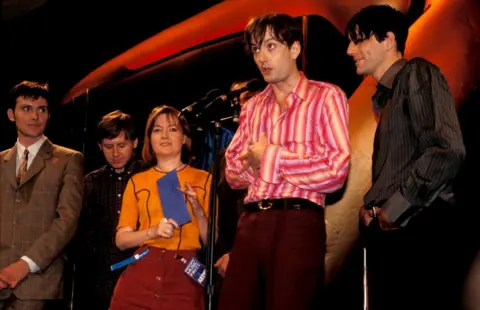
He is not the first artist to contribute his Mercury Prize winnings to charitable organizations.
When they received the award in 1996 for their album Different Class, vocalist Cocker stated that the band would contribute their winnings to the organization the charity.
In 2002, artist the artist divided her prize across multiple good causes, like the NSPCC and a Sickle Cell organization.
"Additionally, I donated a £1,000 to the center, to their classes, because I trained in gymnastics when I was younger and they needed updated gear," the artist explained to the media.
Previously, they gave their winnings to the community center that developed their act, alongside other grassroots music organisations.
Also the 1994 recipients the group gave their prize to a MS organization after a close contact was diagnosed the condition.
"Winning was quite enough," remarked vocalist Small. "The money was the extra but we could do without the extra, because we had the honor. So our success impacted another person's life."
Last week, the Music Venues Trust announced it had rescued two grassroots venues in south-east England, by transferring them to public stewardship.
The Joiners in Southampton and the second in that location were acquired under the Own Our Venues scheme, which is funded by the arts council and supporters who acquire "shares" in the venues.

